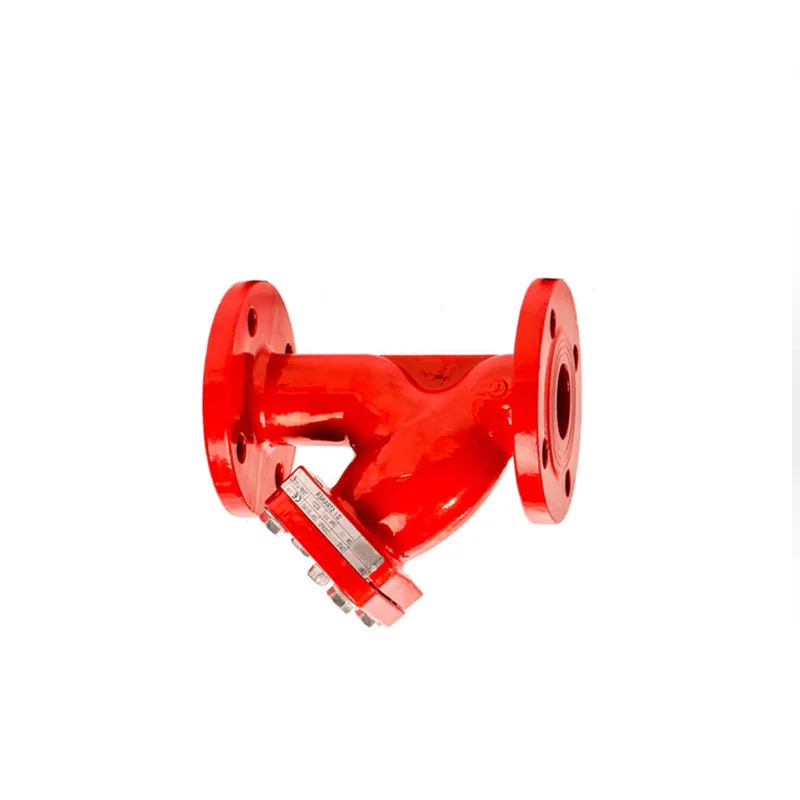
Pipeline filters that protect pumps, valves and meters by removing rust, sand and scale from the flow. Flanged and grooved ends, ductile iron, cast steel and stainless steel bodies, with stainless screens.

Design to ASME B16.34, API 598, EN 12516-1. DN15 to DN600, PN10–PN25 / Class 150–300. Protects pumps, valves and meters from blockage.
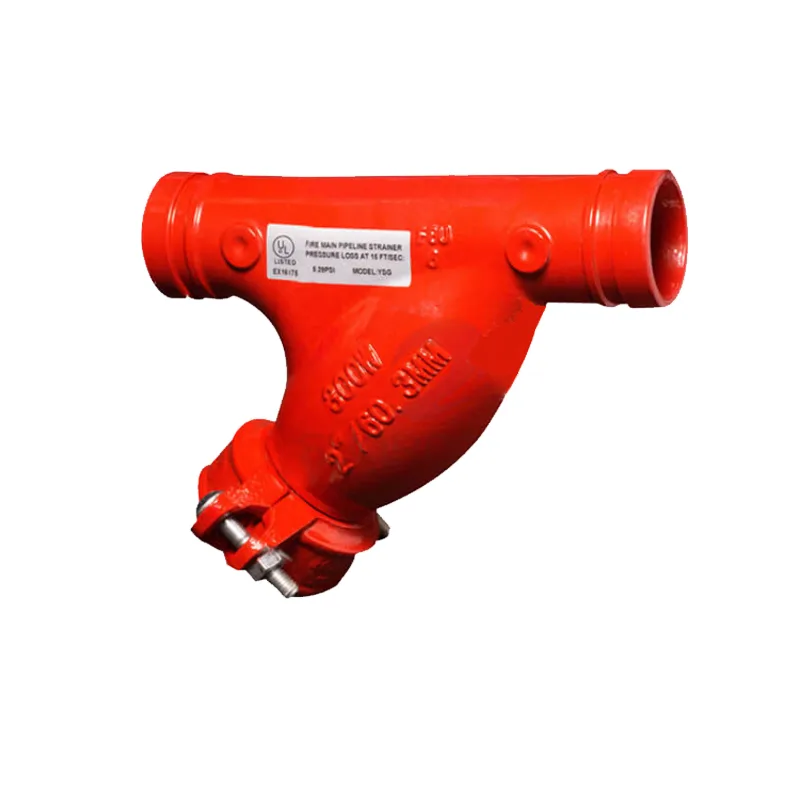
Quick, heat-free installation with grooved couplings on fire protection and water lines. DN15 to DN300, PN10 / PN16 / Class 150.
For steel pipe lines where the strainer bolts between existing flanges. Low flow resistance, simple structure, easy maintenance.
For fire protection and water lines joined with grooved couplings. Compact, large filtering area, quick to install and clean.
How to fit and keep a Y-type strainer working on the line.
Install with the strainer leg (blowdown port) pointing down so sediment collects where it can be flushed, not in the flow path.
Align the flow direction with the arrow marked on the body. A reversed strainer blocks the media instead of filtering it.
Install before pumps, valves, meters and other sensitive equipment so the debris is caught upstream of what it would damage.
Isolate and depressurize before opening. Remove and clean or replace the screen, or use the blowdown plug to flush without disassembly.
Pumps, valves, meters and other downstream equipment, by removing rust, sand and scale from the flow before it reaches them.
Flanged ends bolt between existing flanges (ASME B16.5 / EN 1092-1) and suit steel pipe lines; grooved ends join with grooved couplings for quick, heat-free installation on a fire or water line.
Body in ductile iron (GGG40/50), cast steel (WCB) or stainless steel (CF8/CF8M); screen in stainless steel 304 or 316; seals in EPDM, PTFE or graphite.
DN15 to DN600 (1/2 inch to 24 inch), PN10 to PN25 and Class 150 to 300 for the flanged range; grooved covers PN10 / PN16 / Class 150 up to DN300.
Yes. Filter mesh from 18 to 480 mesh, customizable to the media and the particle size the line has to hold.
The body, the screen and the end connection are the three fields that decide whether the strainer protects the equipment or becomes a maintenance problem. Compare the options, find your buying situation, and check the order before it goes to production.
| Option | Good for | Where it fails |
|---|---|---|
| Ductile iron body, SS304 screen | Water, fire protection and HVAC lines; the economical default for clean media | Not for aggressive chemicals or steam above 120 degrees C |
| Cast steel (WCB), SS304/316 screen | Higher pressure and temperature, oil and steam lines | Heavier and costlier than ductile iron for plain water duty |
| Stainless steel (CF8/CF8M) body | Corrosive media, chemicals, marine and offshore lines | Highest cost; over-specified for clean potable water |
Three common ways people buy this line. Pick your lane and the quote comes back with the right questions already answered.
You carry strainers across sizes and want the body material, the mesh and the end connection consistent per SKU, plus the packing and carton quantities. Ask about the size-to-carton map.
You buy strainers against the line schedule and need the size, the pressure class and the end form to match the flanges or couplings on the same run. Send the schedule and the quote comes back matched.
You import under your own brand and care about the body marking, the screen spec and the document set. OEM marking and per-container cert copies are available.
Six things to check on the quotation, the sample or the pre-shipment report. Hand this list to whoever approves the order.
Buyers comparing Y-type strainer suppliers are usually checking three things: the body material for the media, the screen material for the particle load, and the end connection for the line. The range covers flanged and grooved ends, ductile iron, cast steel and stainless bodies, and 304/316 screens.
A strainer is bought for what sits behind it: the pump, the valve or the meter that has to stay clean. State the line size, the pressure class and the media, and the strainer comes back matched to the equipment it protects.
The strainers ship from the Tianjin warehouse alongside the pipe, fittings and hangers. Send the scope as one bill of materials and the full package leaves together.
Send your bill of materials or drawing — we confirm spec, cert and lead time, then ship the full package.